
Sparks Previous Residents Sources
Begin a backward search by choosing the source for the era in question. The county parcel card provides a present-day bridge, but it is not a historic ownership roll. Recorder records trace transactions. Directories, census pages, newspapers, and obituary tools help identify a past household. Maps and permits date a structure or change, not a resident. The table keeps those purposes distinct before names from different periods are joined together.
| Source | Years It Covers | Where Held | What It Shows |
|---|---|---|---|
| Recorder real-estate index | November 1991 to current | Washoe official-records self-service portal | Indexed parties, recording period, and document record, without address or APN search fields |
| Recorder document images | August 16, 1999 to current | Official-records self-service portal | Image of a deed, lien, map, or other recorded instrument |
| Recorder books and microfiche | Before November 1991 | Recorder counter in Reno | Older grantor-grantee and book or page trail |
| UNR city directories | Early runs starting in 1900 | UNR Digital Collections | Dated address and household clues; exact volume list was not published in the inspected source |
| Library directories and telephone books | Current and historic issues; exact run not published | Downtown Reno Library | Name and reverse-address clues, with staff-assisted searching |
| Federal census | Public through 1950 | National Archives, library databases, and FamilySearch | Household structure, age, relation, birthplace, and broad address or precinct clues |
For a post-1991 transfer, the online index is usually the fastest first pass. For an older parcel, start with the Assessor's legal description and prior APN, then plan for a Recorder counter visit and library correlation. A missing web result can be a coverage gap rather than proof that no earlier owner or household existed.
Sparks Ownership Starting Point
The current Washoe Assessor parcel card is the bridge between a modern street address and an older record trail. Search by address, owner, APN, or All, then record the APN, the assessor parcel number, along with the situs address, owner or trustee, mailing address, legal description, subdivision, transfer rows, last document date, and prior APN. Situs describes the physical parcel. A mailing address is where correspondence goes and does not establish that an owner lived at the site.
The property's free Assessor search may also show permits, maps, sales or transfer data, and a link toward the recorded document. Those fields are leads that must be matched against the legal description or APN. A changed street name, merged lot, split parcel, or prior APN can break a search based on address text alone.
The Washoe Recording Notification Service lets a person enroll a name or parcel number for free recording alerts. It is a fraud-monitoring tool, not a title search. An unexpected alert should be checked in the official document system and preserved with the document number before a report is made.
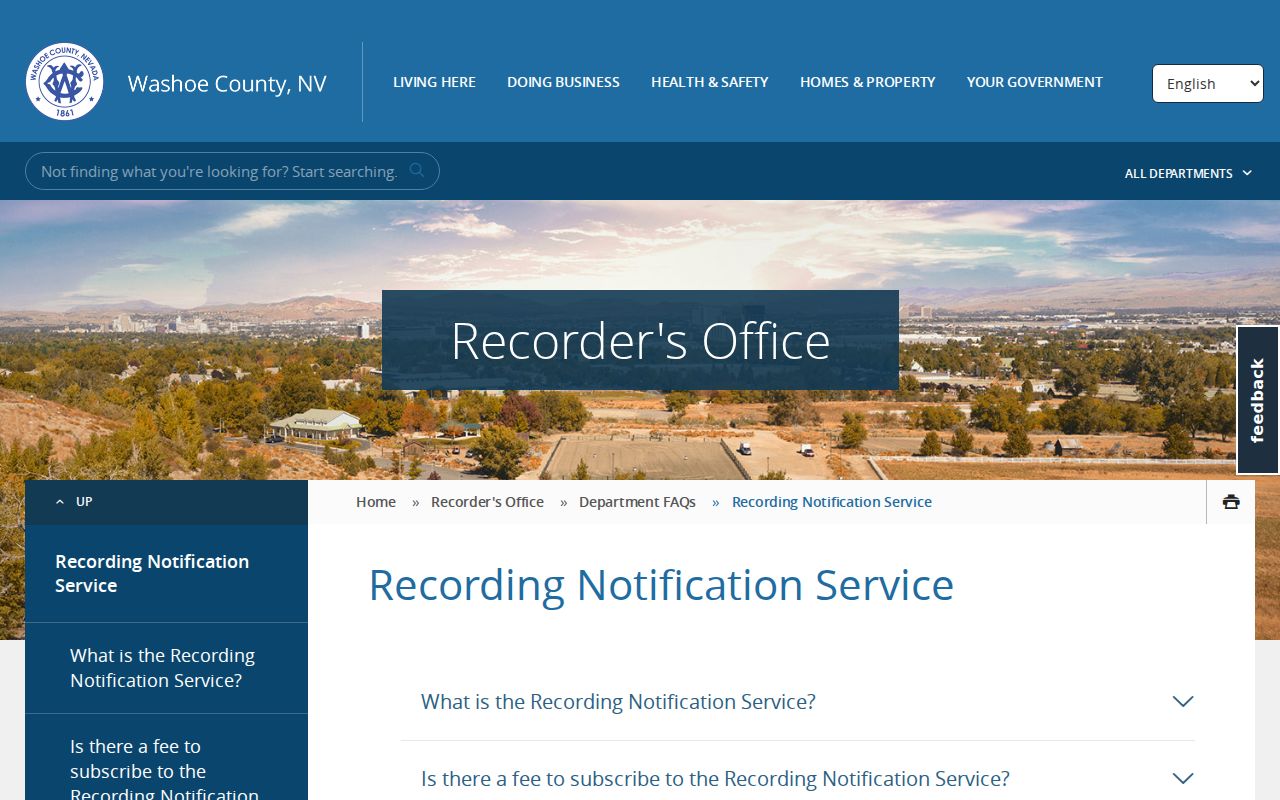
The alert service supports careful ownership research by pointing back to a real recorded event. It does not identify previous residents or replace the document-by-document chain.
Sparks Previous Residents Deed Chain
A deed chain traces ownership, not every person who lived in a home. Still, it gives the dates and party names needed to connect household sources. The Recorder indexes parties by last name followed by a space and first name, with no comma. Use a narrow approximate year and test initials, spouse names, trust names, entities, and spelling variants when the parcel card shows more than one form of a name.
- Copy the current owner or trustee name, legal description, APN, prior APN, and last document date from the Assessor card.
- Search the current owner as grantee in the Recorder system near the likely transfer date. A grantee is the party receiving an interest in the recorded instrument.
- Match the candidate document using its legal description or APN, recording date, document number, and grantor-grantee pair. The grantor is the party conveying an interest.
- Search that grantor as a grantee during an earlier period, then repeat the same validation. Follow an estate or trust with a parallel probate or estate search when the instrument points that way.
- At the online cutoff, take the accumulated names and years to Recorder books or microfiche. Validate the same parcel through plat, subdivision map, legal description, and prior APN information.
The Recorder grantor-grantee search is the official starting point for the name-and-year step, although an anti-automation barrier can appear. Its FAQ and counter procedures remain the fallback when the portal cannot supply a workable session.
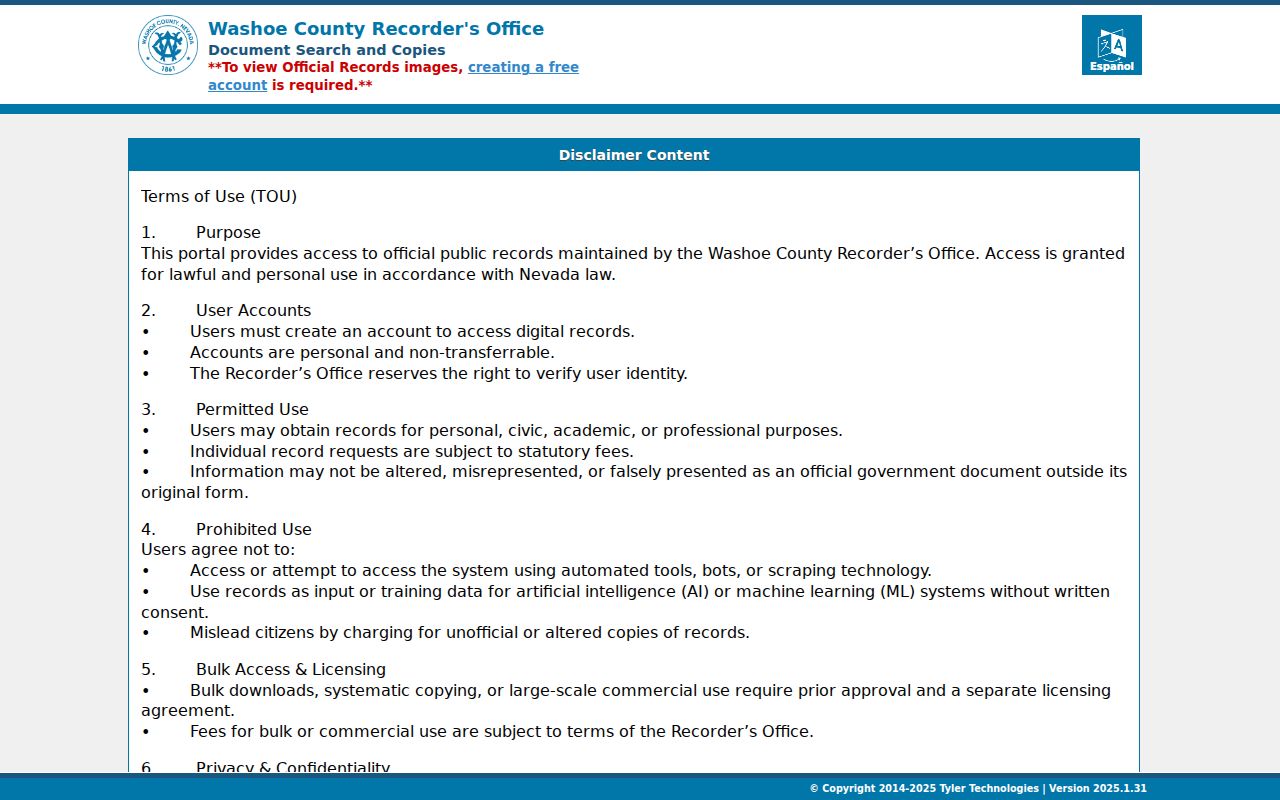
Read each result as one recorded transaction. A trust, estate, lien, reconveyance, or quitclaim can be part of the parcel history without being a conventional sale.
Sparks Recorder Era Break
The date of the target transfer determines the next access channel. Washoe's online real-estate index begins in November 1991. Real-estate images begin August 16, 1999. Before the index cutoff, use the Recorder's books or microfiche at 1001 E. Ninth Street, Building A, Reno. The office is open Monday through Friday from 8 a.m. to 5 p.m. and does not provide staff searching, so arrive with the party names and approximate dates already assembled.
Index and document viewing are free. Watermarked unofficial online copies are free, while plain copies cost $1 per page and a certified copy adds $4. The Recorder can also be contacted at 775-328-3660, record@washoecounty.gov, or through its mail-copy route. These routes matter when a prior instrument is outside the web window or a needed image is not online.
Note: A recorder index hit is not enough by itself, because the party name and date still need to be matched to the legal parcel described in the instrument.
Sparks House History Support
Washoe County Library does not label a formal house-research guide in the inspected material, yet its directory and telephone-book search service is a practical local support channel. Give staff an address, names, and dates when requesting a search. Downtown Reno Library has local directories, telephone books, newspaper resources, and an obituary index. Its staff-search phone is 775-327-8312, which is useful when a volume is unindexed, fragile, or difficult to search by OCR.
The Washoe County Library FAQ describes this directory and telephone-book assistance, along with its obituary and microfilm holdings. It is a stronger first call than assuming an old address can be searched as a complete digital dataset.
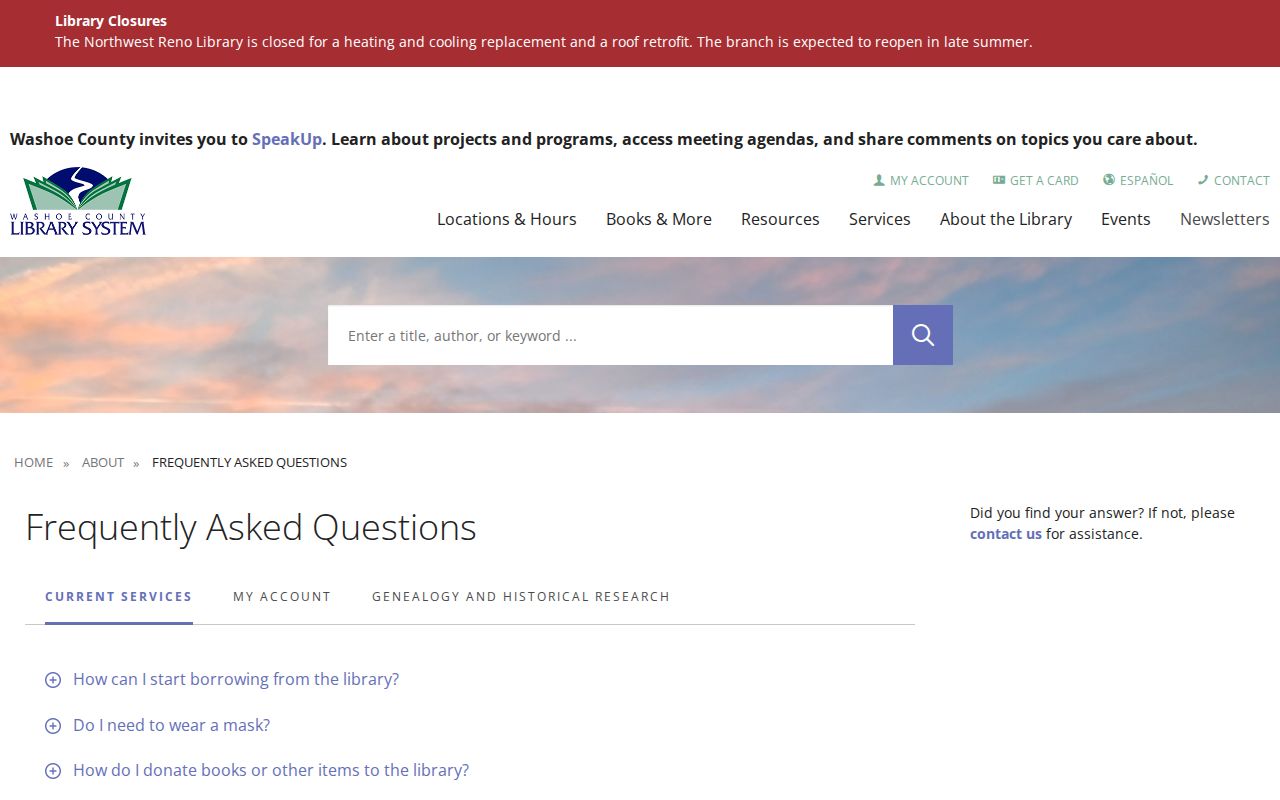
Library staff can return a dated directory or telephone-book clue. Pair that clue with the volume date, a page citation when available, and a second source before treating it as a household identification.
Sparks Directories and Census
Ownership is only one layer of a previous-residents search. City and reverse directories can identify an occupant or subscriber at a given time, while the census records a household at a much wider interval. UNR's local digital collection begins with Reno and Sparks city directories from 1900, though the exact publisher and year-by-year inventory was not exposed during inspection. The Downtown Reno Library offers the shelf and staff-search fallback when a digital item is unavailable.
- Start with a deed date or a known address, surname, spouse, or approximate year.
- Check the alphabetical directory entry and record the address and the volume's abbreviation key before drawing conclusions from shorthand.
- Use the reverse or criss-cross section for the same street number. It can surface an occupant when the surname is difficult to read or appears under another household member.
- Pair nearby directory years with the 1900, 1910, 1920, 1930, 1940, or 1950 census, depending on the period. The census gives household structure; a directory supplies a tighter dated address clue.
- Confirm the match with a deed, permit, newspaper, obituary, or probate record, and retain the source date beside each conclusion.
These sources can help reconnect a former household or identify an heir when probate, obituary, directory, and deed evidence agree. A single name match is never proof, especially when the address or household changed between record dates. The Sparks Directory Book lists the collection holdings and access routes.
Sparks Previous Residents in Print
Newspapers can close a gap between a directory entry and a later deed or probate file. The Reno obituary index at Downtown Reno Library covers mid-1962 through September 2007 and provides a date and page for microfilm retrieval. It does not include the Sparks Tribune. For local Sparks notices, the Sparks Library microfilm run covers 1977 through 2007. The Reno Evening Gazette is available through library ProQuest from March 28, 1876 through September 30, 1983, and RGJ full text begins September 1, 1984.
Obituaries may identify a spouse, children, funeral home, residence, or former residence. Probate files may identify heirs, representatives, or mailing information. They should be verified with court records and read with care because the record can contain restricted personal information. Use the article date and page rather than relying on a search-result snippet.
The Sparks Museum Research Center, at 814 Victorian Avenue, holds local artifacts, photographs, and printed material. It is open Tuesday through Saturday from 10 to 4, and researchers can call 775-355-1144. Ask about an address, surname, historic business, or Victorian Avenue place, without assuming every item is available through a name index.
Sparks Address Continuity
Early local records may not say Sparks at all. The city grew from a Southern Pacific railroad relocation in 1904, with homes moved from Wadsworth on July 1, 1904, and incorporation following on March 15, 1905. A household may therefore appear in a railroad record, Wadsworth reference, East Reno, Glendale, or Harriman source before it appears under a stable Sparks address. Use county, surname, employer, and nearby place references rather than rejecting a result solely because it lacks the modern city name.
Street names can also shift. A 2019 regional agenda considered changing part of C Street to Avenue of the Oaks between Victorian Plaza Circle and Pyramid Way. Add both forms, the nearby intersection, the legal description, and a prior APN to the research log. This is particularly important for a parcel affected by subdivision work, annexation, a merger, or a split.
Note: Postal city and ZIP, WRMS Corporate Area, assessor situs and APN, and the legal description are separate facts and should be recorded separately.
Sparks House Dating Clues
Construction history can help place a household trail in the right era without naming a resident. Assessor permit rows can include number, agency, issue date, status, type, description, estimated value, and last note. ONE Regional Licensing & Permits can add application, address or APN, owner or applicant, project, and status information for current planning and permit records. A project date may mark an addition, demolition, sign, or other change. It is not evidence of a move.
Sanborn fire-insurance maps are another dating tool. The Library of Congress result inspected for Reno spans 1918 to 1949, but a separate digitized Sparks run was not located. A Sanborn sheet shows street layout, building footprint, use, and construction or fire context, not occupants. Use it alongside the city directory, parcel legal description, and Recorder trail.
For a parcel near the current era, the ONE Regional Licensing & Permits portal and the relevant city or county counter offer a useful address or APN fallback. Confirm the jurisdiction through WRMS Corporate Area before requesting records.
Sparks Previous Residents Privacy
House-history work should remain focused on dated, necessary records. A deed is an ownership record, and a directory is an occupant or subscriber clue. Neither gives permission to compile private details about living people. The public records reviewed here do not provide DMV addresses, utility-customer lists, or a complete list of household members. Protected voter addresses and confidential-address information must not be copied into a research note.
Nevada's Confidential Address Program provides a substitute address and mail forwarding for eligible survivors, and ordinary confidential-voter status can withhold address and phone information. If an older source appears to expose protected details, do not amplify them. Ask the custodian or program contact how a historic item can be corrected or restricted instead.
Lawful house-history use. Trace Sparks previous residents for family history, estate or heir research, property history, and personal curiosity. Nevada law prohibits using addresses, names, or record fragments to stalk, harass, intimidate, or harm anyone.
Sparks Deed Trail Terms
Use the same terms throughout the research log so the ownership and household trails do not get mixed together.
- Grantor
- The party conveying an interest in a recorded instrument. In a conventional sale, this is commonly the seller.
- Grantee
- The party receiving an interest in a recorded instrument. In a conventional sale, this is commonly the buyer.
- Chain of title
- The validated sequence of recorded interests connected to the same legal parcel, traced through documents rather than address text alone.
- Legal description
- The lot, block, subdivision, metes-and-bounds, or other land description used to establish the parcel in a deed or map.
- Criss-cross directory
- A reverse directory arranged by street number and address, useful for dated occupant or subscriber clues.
A careful use of these terms makes it easier to tell a recorded owner, a documented occupant, a mailing recipient, and an unconfirmed name apart.