
Sparks City Directory Collections
Sparks city directories are spread across several local collections rather than one complete, published run. UNR holds digitized Reno and Sparks directories beginning in the 1900 era, while the Downtown Reno Library maintains current and historical directories and telephone books. The library can search for a supplied name, date, and part of an address when an older volume is difficult to browse. The exact publisher and year-by-year inventory for the UNR scans was not published in the inspected source, so each volume should be checked for its own title page and date.
| Collection | Years | Where Held | Access |
|---|---|---|---|
| UNR Reno and Sparks city directories | Early directories beginning in 1900 | UNR Digital Special Collections | Digital collection; inspect the item list for each volume |
| Local city directories and telephone books | Current and historical issues; shelf run not published | Downtown Reno Library | Browse in person or ask staff to search |
| Sparks Tribune microfilm | 1977-2007 | Sparks Library and Reno-area holdings | In-person newspaper research |
| Reno obituary and newspaper resources | Obituary index mid-1962 to September 2007; other runs vary | Downtown Reno Library and licensed databases | Index, microfilm, and cardholder access |
The table describes access routes, not a promise that every year survives or is online. A missing search result may reflect a shelf gap, an unindexed scan, a spelling difference, or a household listed under another adult. Note: Record the title page, publisher, and printed year before treating an entry as evidence for a particular date.
Sparks Directory Shelves in Reno
The Washoe County Library genealogy resources place local directories beside telephone books, clipping files, newspapers, ProQuest, and other research tools. Downtown Reno is the practical counter for a directory search that needs a staff-assisted check. Provide a surname, an approximate date, and any address fragment available. That combination gives staff a better chance to distinguish a likely household from a similar name.
Use the newspaper layer when a directory entry disappears. The Reno obituary catalog covers mid-1962 through September 2007 and gives a date and page for retrieving the underlying notice on microfilm. It does not include Sparks Tribune notices, which is why the Sparks Library microfilm run matters. Reno Evening Gazette material and later Reno Gazette-Journal text have separate coverage through library resources. A date and page citation is more reliable than an OCR-only name match, especially where street names are short or altered.
The library route also helps with reverse clues. Telephone books and later reverse or criss-cross sections can begin with an address instead of a surname. They are historical leads, not proof of legal ownership or continued occupancy. For current address-keyed records, use the Sparks street directory route after the historical name trail has been narrowed.
UNR Sparks City Directories Online
UNR Digital Special Collections describes a digitized collection of Reno, Sparks, and surrounding-area city directories beginning in 1900. The direct collection node returned an access barrier during research, so a successful landing-page visit does not establish that a particular year or page is available. Work from the collection listing, then save the volume date and scan-page reference with each finding.
Digital pages are especially useful when a surname is unusual or a street is known. Search both the name and likely variants, then inspect nearby lines by eye. Initials, spouse references, and old place names can explain why a modern keyword search misses a household. Early material can refer to East Reno, Glendale, Harriman, Wadsworth, or a railroad setting before the name Sparks became settled in civic use.
The UNR Special Collections holdings add diaries, letters, oral histories, photographs, and records of local families and organizations. Finding aids can reveal a relevant box or interview even when an item requires onsite use. Those holdings add context to a directory entry; they do not turn an old address line into a current list.
Reading a Sparks City Directory Entry
An alphabetical entry should be read as a compact set of clues. Directory conventions vary by publisher and year, so first locate the abbreviation key in that exact volume. The research source did not capture a scanned Sparks entry, and no invented sample should stand in for one. The inventory below lists fields that the collection review identifies as expected places to inspect when an actual page is open.
| Printed name | Look for surname, given name, initials, and spelling variants. |
|---|---|
| Relationship text | A parenthetical spouse or relationship cue can separate people with the same name. |
| Occupation line | May identify a trade, business connection, or other work description. |
| Street address | A date-specific location clue that should be checked against the reverse section when present. |
| Notations | Widow, boarder, roomer, telephone, or ownership-style marks may be defined in the volume key. |
- Criss-cross directory
- A reverse section organized by street and address, often used to locate a listed occupant or subscriber from a known address.
- Householder index
- An arrangement that centers the adult or household name used by that directory, which may differ from a full household list.
- Abbreviation key
- The publisher's explanation of shorthand. Photograph or transcribe it before assigning meaning to a mark.
An address and notation can be valuable, but neither establishes that the person owned the parcel or remained there after publication. Compare it with a deed, tax record, permit, newspaper, or census record before making that kind of claim.
Sparks City History at the Museum
The Sparks Museum collection holds printed materials, photographs, artifacts, and railroad and community material that can put a directory address into local context. Its research center at 814 Victorian Avenue is open Tuesday through Saturday, 10 a.m. to 4 p.m. The collection has no public name-index database identified in the research, so ask for the relevant collection, accession, or History Map entry rather than assuming a person search will return every item.
The museum image is a reminder that printed and visual holdings can supply dates, places, and neighborhood context around a directory line. Treat an artifact label as a historical lead, then confirm names and dates in the dated source that supports the claim.
Sparks City Directory Digital Sources
The library genealogy page shows the mix of directories, telephone books, newspapers, and genealogy tools available through Washoe County Library.
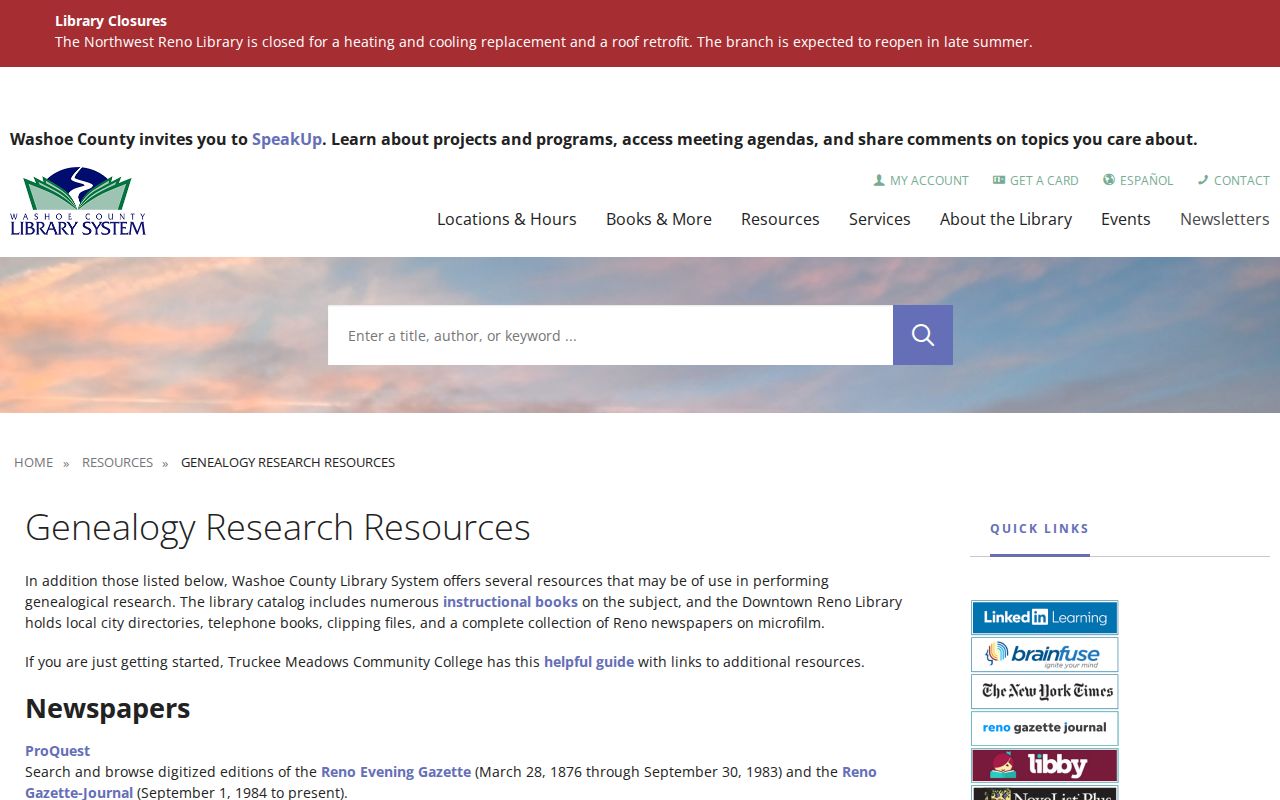
That mix is useful when the directory alone supplies only a surname or street fragment and a newspaper date or obituary citation can move the search forward.
The UNR digital collections landing page is the official route to the early Reno and Sparks directory material.
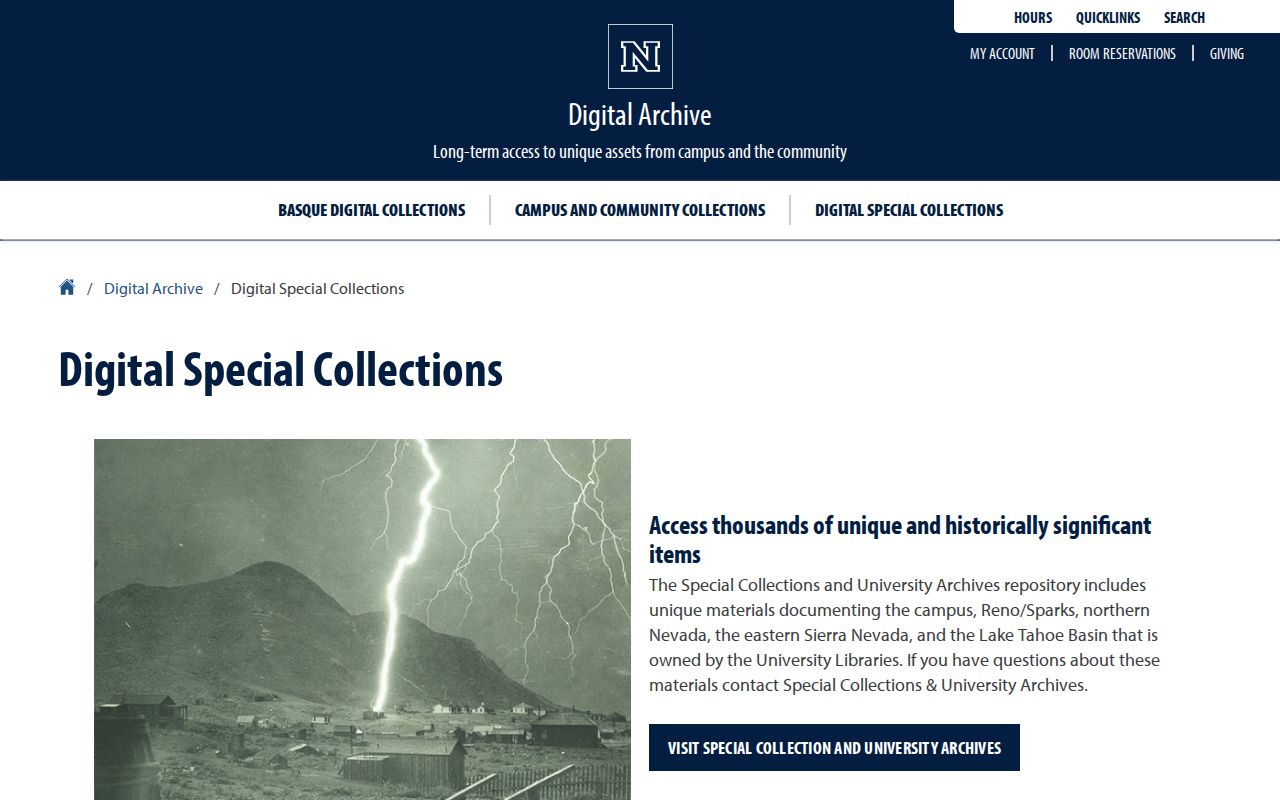
Use the landing page to reach the collection, then verify the volume year and scan page rather than relying on a search snippet alone.
The UNR Special Collections page identifies broader Reno and Sparks family, organization, and oral-history holdings.
These companion records can explain a family or organization connection when the city directory gives only a brief dated entry.
Sparks Directory Gaps and Newspapers
When a household is absent from a city directory, turn to newspaper and obituary resources before assuming the trail ends. The Downtown Reno Library's obituary index provides date and page leads for the Reno papers, while Sparks Tribune microfilm covers 1977 through 2007 at the Sparks Library. The Nevada State Journal run is available through the Nevada State Library, and later Reno Gazette-Journal text is available to library cardholders through ProQuest.
Newspapers can clarify a move, death, organization connection, or place name. They also carry OCR errors, abbreviated names, and changed street references. Search a surname with a spouse name, an old railroad-related location, or a known address fragment. Keep the publication title, date, page, and any scan reference together so another researcher can examine the original notice.
Tracing Sparks Households Across Directories
A household trail is strongest when it moves year by year instead of jumping from one isolated name result to another. Begin with a known address, surname, spouse, business association, or obituary detail. The federal census provides household structure and birthplace at decade intervals, while directory volumes can provide a closer address and work-history signal around those dates. Use both record types as separate evidence.
- Choose the directory year closest to the known address or name and record every printed spelling and notation.
- Follow the surname forward and backward, noting address changes, relationship text, and work descriptions.
- Check the reverse or criss-cross section when available, especially when the alphabetical spelling is uncertain.
- Pair the directory years with the 1900, 1910, 1920, 1930, 1940, or 1950 census snapshot that fits the period.
- Use a deed, permit, newspaper, or obituary citation to test whether the apparent move or disappearance is the same household.
A different spouse, a different work line, or an abrupt street change should prompt a second check rather than an automatic match. Census, property, and newspaper evidence can distinguish a relocated household from a same-name person. Note: Federal census records are public through 1950, and modern city lines do not always match historical enumeration areas.
Sparks Directory Names Before Incorporation
Sparks began with the Southern Pacific relocation of railroad shops from Wadsworth in 1904 and incorporated in 1905. Homes and trees moved on July 1, 1904, creating a short period when a household connected with the later city may appear under Wadsworth, East Reno, Glendale, Harriman, a railroad camp, or a county description. That geography is a practical search issue, not just local history.
The Southern Pacific Men's Railroad Library was built in Sparks in 1905, burned in 1908, and the first Sparks branch facility opened in 1932. Some early community material therefore survives outside a local public-library shelf. Search UNR collections, museum material, county newspapers, and census records alongside city directories. A 1900 entry can predate the incorporated city entirely, while a 1905 listing may describe a relocated Wadsworth household rather than a newly arrived family.